

An anti-detective story
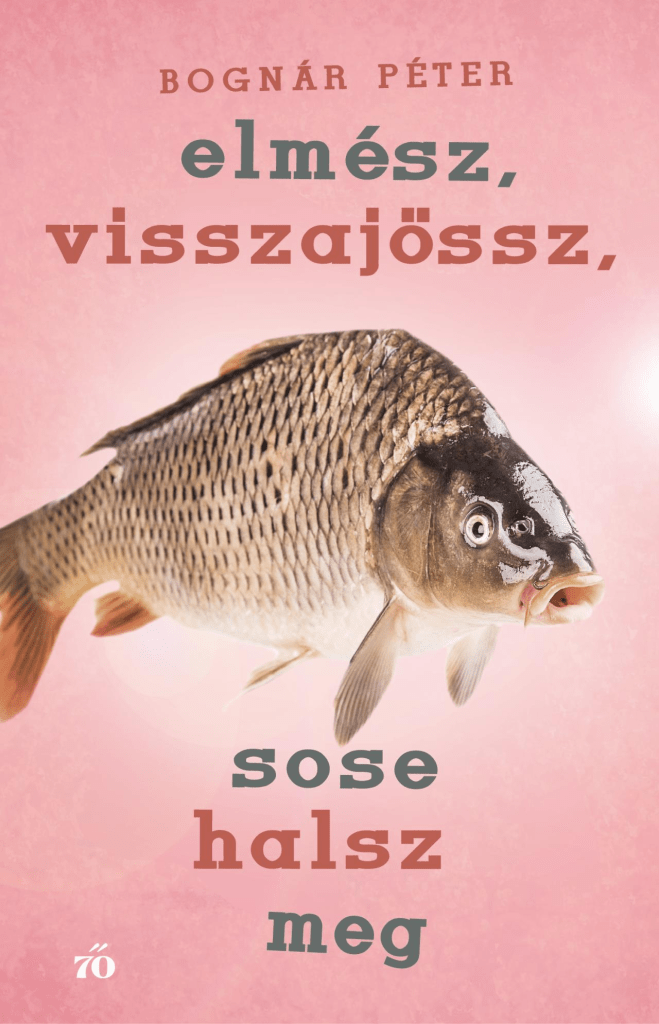
A crime writer is forced to confront the possibility that his novels may be inspiring real crimes. When a fellow villager accuses him of defamation and is later found dead, suspicion falls on the writer’s friend, the local civil patrolman, who has vanished. Fleeing the village with his young daughter, the writer sets out to find his friend – only to be drawn into a chain of extraordinary and shocking events.
The protagonist of the novel, nicknamed Besseller, is a writer who bears a close resemblance to the author himself. He is forced to confront the unsettling possibility that his crime novels may themselves be causing real crimes. A fellow villager, nicknamed Individum, who had previously accused him of defamation has died from a terrible blow.
Can he go on writing, especially now that a German edition – long a coveted prize among Hungarian writers – is already in preparation? And as if he didn’t have enough to contend with, jealousy begins to torment him when his wife hints that she may want to exercise her sexual freedom – the very freedom Besseller has urged on her for so long.
A chain of extraordinary events follows. Besseller leaves with his young daughter, Lizi, to search for his friend Tóni, the civil patrolman accused of the murder and now missing. In reality, Tóni has been lured into a trap – cruelly deceived, beaten, and nearly killed in a sequence of absurd and irrational incidents that nevertheless unfold with grim, inexorable logic.
The two storylines – that of the writer and that of the civil patrolman – run in parallel and are, in the end, very similar. Even though they’re two very different people: one an intellectual, the other an ordinary man, both of their lives are gradually falling apart.
In serious and playful ways, Bognár’s novel asks many questions. How does a marriage fall apart? How does someone – anyone – become a narrow-minded, monomaniacal, compulsive person? How does a novel get written? More precisely, how does a detective story, traditionally based on logic and rationality, get written in a world in which irrationality abounds? And should literary works be censored if they offend someone’s sensitivities?
The title is a quote from Plutarch, an oracle that has two possible meanings: “You will go, you will return, and never die in war; you will go, never return, and die in war.” The protagonists of Bognár’s novel are experiencing the fact that at any moment they could be cast out of the world they consider familiar and from their well-established beliefs.
Bognár’s style is playful, ironic, with grotesque and absurd scenes, and with nods to the sentimentality of popular fiction.
Product details
ISBN 978 963 1445 5 41
2025, hard cover with jacket
296 pages
5499 HUF
I read everything by Péter Bognár: he – put simply in terms of ranking – is the greatest among us. (László Krasznahorkai)
 Magvető Rights
You must be logged in to post a comment.