Uncategorized

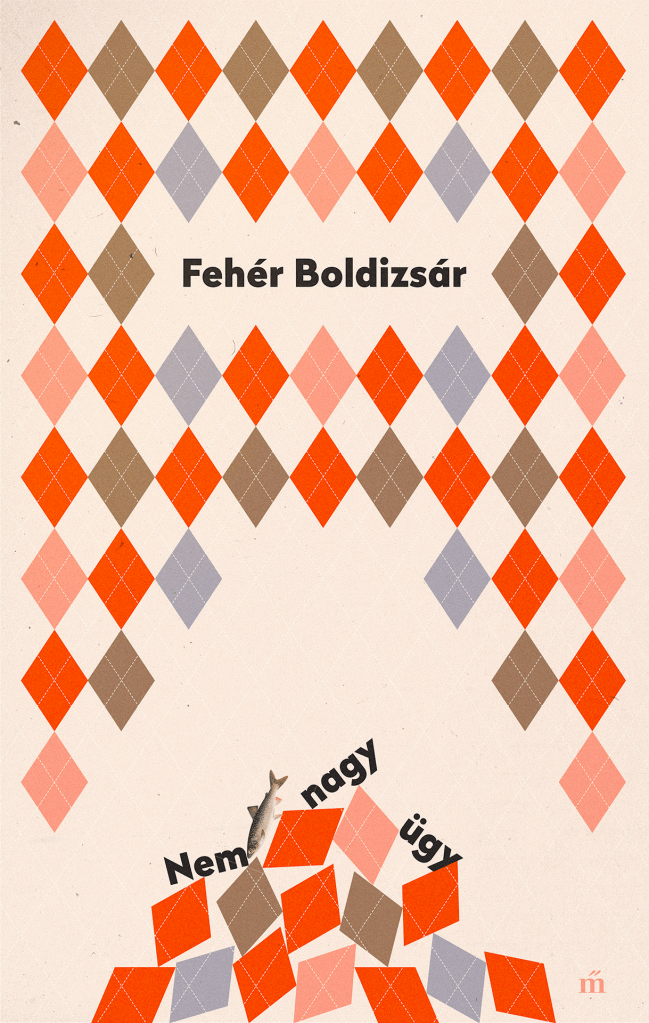
BOLDIZSÁR FEHÉR: No Big Deal

How can we dodge wasting time chatting on the street with someone we barely know? What should we do if we don’t like a present we have been given? Why does the barber always cut our hair shorter than we want?

Perhaps Socrates was right to say that the unexamined life is not worth living. But while Socrates was asking about the big questions of life, Boldizsár Fehér is preoccupied rather with its small questions: the everyday awkwardnesses and social situations in which we constantly find ourselves but which we would all love to avoid.

Boldizsár Fehér’s absurdist humorous sketches depict situations in which people defy the unwritten rules of polite society and with their unvarnished reactions drive their fellows mad. No Big Deal is a kind of inverted, tongue-in-cheek book of etiquette illuminating the many barriers, some big, some small, that we have to negotiate in the course of our daily lives.

It is an indisputable fact that acquaintances have long existed amongst us. That prompts the question: why haven’t encounters with familiar life forms so far received as much attention as we have devoted to encounters with alien life forms?

Product details
ISBN 978 963 1441 76 5
2022, paperback with flaps
224 pages, 125×30 mm
3499 HUF

Boldizsár Fehér

Uncategorized

ÁRPÁD KUN: Molly Male

Medárdus has emigrated from Hungary to Norway, where he lives with his wife and three children, with a fourth on the way. He makes his living as a carer in an old people’s home and as a home help: his day’s work done, he is able to devote himself to bringing up his children in ideal circumstances. The narrator, alongside his numerous family and work commitments, focuses on a single activity important to him: cutting short his sleep, he regularly gets up before daybreak to work on his novel.

This busy and hardworking life is upended when Medárdus, driving two of his daughters, crashes his car. Though no one is hurt, the accident sets off a chain reaction of events in the outside world as well as in the lives of those involved. A mysterious African refugee surfaces and becomes a close friend of the émigré Hungarian. With his help Medárdus discovers and explores a system of caves beneath his house that is home to exceptionally rare and valuable mushrooms.

Molly Male offers a highly distinctive fusion of reality and fantasy. The narrator’s failure to get a decent night’s sleep results in the life-story of a Hungarian-Norwegian family – which begins by depicting the life-affirming dignity of manual labour and a father’s everyday life amid the inhospitable landscape of western Norway – gradually acquiring a surreal quality. Yet thanks to the good-humoured and sympathetic tone so characteristic of Árpád Kun’s novels, somehow this comes to seem completely natural. The reader cannot tell where reality ends and fantasy begins, without ever feeling as though they have lost their bearings.

“It seems that everyone is constantly asserting how wretched life is, yet no one ever points out that every moment you have survived is an enormous anomaly. Every moment is a gift: look how fortunate you are it wasn’t you that died.” (Árpád Kun in an interview)

Product details
ISBN 978 963 1441 72 7
2022, hard cover with jacket
304 pages, 140×35 mm
4499 HUF

Árpád Kun

Uncategorized

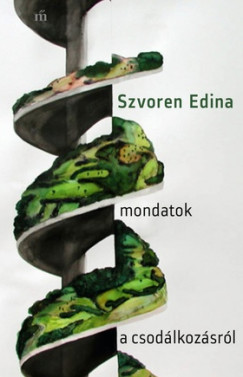
EDINA SZVOREN: Sentences on Wonderment

Könyv: Mondatok a csodálkozásról (Szvoren Edina)

Short stories

Edina Szvoren’s fifth collection of distinctive short stories maintains the uniformly high standard of writing that we have come to expect from her. This volume nonetheless differs from the previous ones in that here the keynote of its unmistakably grotesque, absurd style is more playful, more humorous, and more light-hearted than in her earlier work.

In its structure, too, this volume is unusual. Sentences on Wonderment consists of three parts: an introductory piece only a few pages long; the “Ohrwurm notes”; and seven fairly long short stories.

In the volume’s title piece the narrator declares that for as long as she can remember, she has been incapable of wonderment because, in her view, anything can happen at any time. But since people expect that she should always be surprised, she tries constantly to pretend that she is indeed in a state of wonderment.

The twenty-nine pieces of the “Ohrwurm notes” – each no more than a few pages long – mirror our everyday world, which is nonetheless extraordinary, dominated as it is by compulsions, mysterious happenings, and curious ways of behaviour. Among these writings we find grotesque tableaux, such as “The blind folk in the cable car”, in which a blind couple enjoy their trip in a cable car heedless of anyone else. There are also parodies: “Bereg baroque” is a caricature of a piece that popularises a work of art, while “Fly-swatters on a human scale” parodies techniques of pseudo-scientific argumentation. There are also grotesque portraits: in one text we encounter a man who “makes curtain arguments”, that is to say, he has an extremely irritating habit of applying a metaphor about curtains in every kind of situation; in another, a woman whose days are spent taking security measures which ensure that a tiny creature terrified of her is able to escape; while “Horse panic”, as its title suggests, is about the many ways in which horses can fall into a panic. Some of the pieces are allegorical and dreamlike, while others are sinister; yet others are irresistibly humorous – but they all bear the hallmarks of Szvoren’s unique style.

As for the seven long stories, each tells a tale that has at its core the strange and difficult nature of human relations: relationships with parents, relatives, friends, and marriage partners. Often it is a tiny individual detail – a characteristic turn of phrase, an unnoticed, ingrained habit, an apparently insignificant gesture repeated for the hundredth time – that hints at what made a relationship fall apart, what was the misunderstanding, frustration, or human frailty that made an entire relationship turn sour and petty.  

As the critic Sarolta Deczki has noted: “Edina Szvoren performs what is one of the most important duties of art: she teaches us how to see, or – to be more precise – to see in a different way. It is impossible to imagine a more withering critique of society than dissecting it in this way, almost molecule by molecule, dispassionately and objectively. It is precisely because of this approach, thanks to her close attention to the minutest of details, that this world becomes surreal, grotesque and hence a critique of its very self.”

Product details
ISBN 978 963 14 2357 0
2021, hard cover with jacket
256 pages, 3499 HUF

Wonderment is a crack into which you can thrust your foot.

Edina Szvoren

Uncategorized

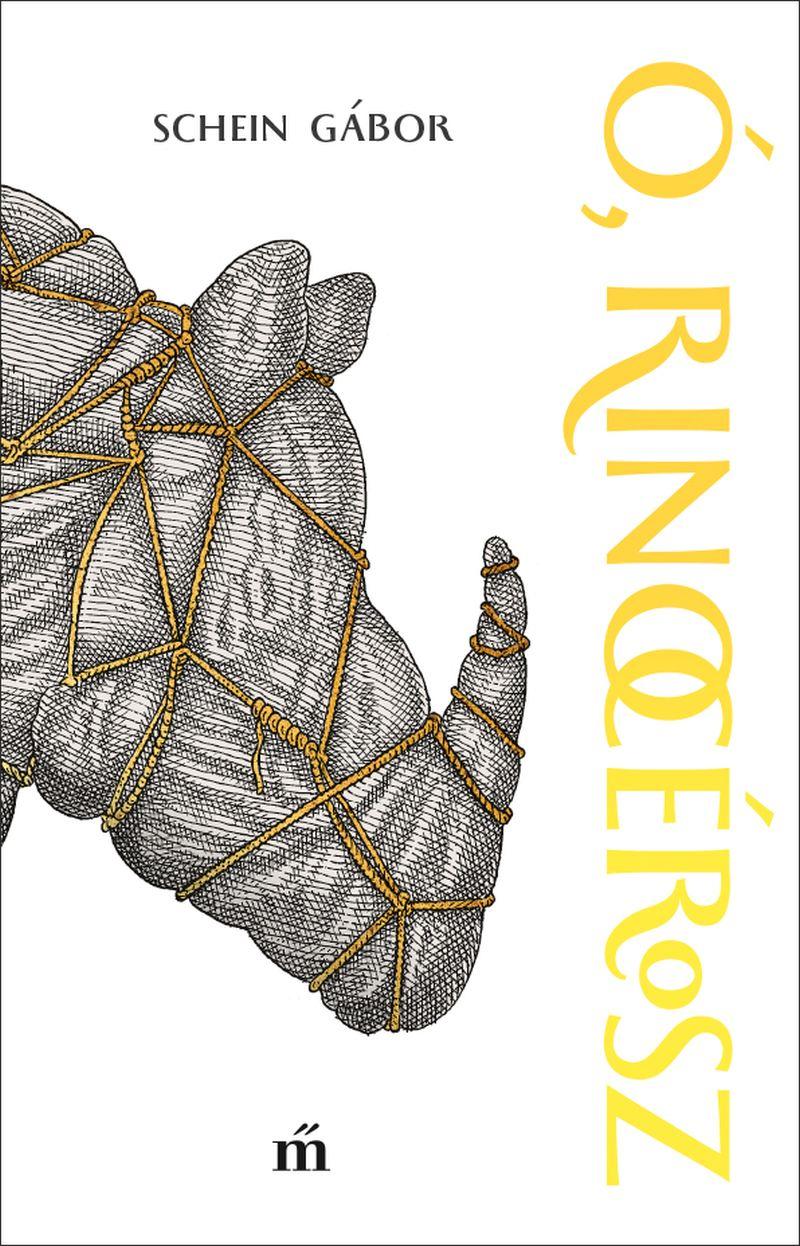
Gábor Schein: Oh, Rhinoceros

A novel in verse

Schein Gábor - Ó, rinocérosz

Gábor Schein’s new book is an entertainment: it imagines what would happen were the history of Europe and western civilization told by rhinoceroses. The story begins with Europa being carried away not by a bull but by a rhino, and ends with the anti-rhino media spreading the news that the source of the epidemic ­­– patient zero, as it were – was an Indian rhinoceros that was not prepared to quarantine.

And why a rhinoceros? The author provides the answer: because, unlike so many other animals, it lacks a mythology: it is a creature that has not been written about. But only until now: Gábor Schein’s work, which is narrated in turn by a rhino, Europa herself, scientists and journalists, consists of 154 short texts about rhinos: texts recalling articles from encyclopedias about the European history of rhinos; writing that suggests news items about the activities of rhinos; as well as the personal reflections and prayers of the rhino.

In the guise of the rhino the author recounts tales of Europe and of refugees, of colonization and the extinction of animal species, of Hungary, and not least of himself. But who is this rhino? A lumbering, anachronistic creature that is at the same time possessed of profoundly human desires – a creature in which are melded brutishness and delicacy of spirit, both hunter and hunted: a radically alien spirit in which we recognise the indecisive nature and the dualities of our own existence.

A late, absurdist relative of Ovid’s Metamorphoses, Gábor Schein’s book is both playful and liberating.

The rhinoceros made a note: life is mere functionality, an operation that is an impersonal end in itself, disrupted only by inexplicable inquisitiveness and love without motivation and devoid of purpose.

Product details
ISBN 978 963 14 2466 9

2021, hardback
160 pages, 3299 HUF

Gábor Schein

Post navigation

Uncategorized

SZILÁRD RUBIN: Reunion in the Wolf’s Lair

In Szilárd Rubin’s only detective novel, published in 1973, it is pouring with rain on a cheerless autumn evening, the post-office has closed, and even the switchboard operator has gone home. The company of ten, though, who have gathered in the doctor’s flat in a little village in the mountains, revels in this cosy environment, isolated and sheltered from the outside world: the men are all old friends who were at school together, and this is their first reunion in fifteen years. They all know each other from way back, here there is no need to exercise their usual professional caution – or so thinks the detective inspector who is one of those enjoying himself.

But at the height of their revels a brutal murder takes place.  The murderer must be there among the nine survivors, smoking a cigarette with them at the elegantly laid-out dinner table, where they all wait in fear and trembling to see who will be next.  And suddenly someone slumps to the floor…

In the best traditions of the whodunit, the inspector at once sets about interrogating each suspect.  The relationships between those present are gradually revealed, and eventually it turns out that the entire class reunion was organised by the counter-espionage services.  With great precision and skill, Szilárd Rubin presents the various motives and interests at play and the devilish thoroughness with which the murder was plotted, administering the details in small, careful doses and making the reader work hard throughout to understand what is going on.

At the same time we are offered a panorama of post-World War II Hungarian society: “On top of the stock-in-trade motifs of sexual impropriety, greed and selfishness, we have the 1944 deportations, the Jews who escaped at the price of having to change their identity, the bourgeoisie who emigrated ahead of the ‘building of socialism’, the Transylvanian Hungarians’ resettlement in the motherland, and the informers, as well as the would-be informers.” (Lothar Müller, Süddeutsche Zeitung)

An exciting piece of genre fiction: a hugely entertaining mix of spy thriller and Agatha Christie-type village whodunit, and at the same time an astonishing feat of historical documentation. (Martin Lhotzky, Frankfurter Allgemeine Zeitung)

Szilárd Rubin