
Uncategorized

KRISZTIÁN GRECSÓ: My Father Sent Word

There are family sagas that unfold a family’s story through strong male characters, others through resilient women who have endured much suffering – My Father Sent Word does so through lost generations of men.
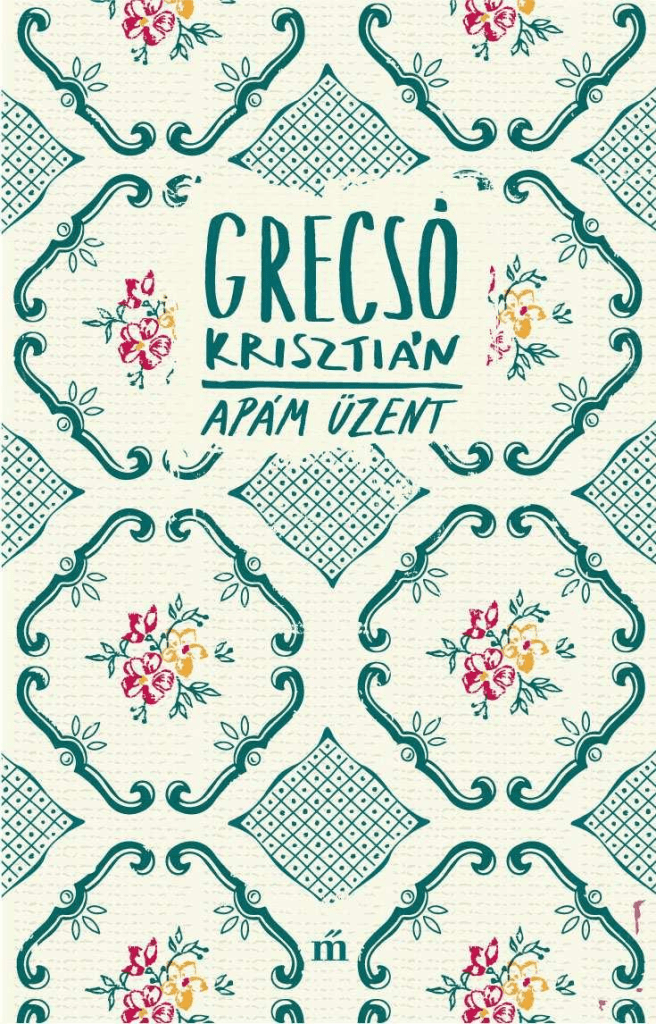
Erik, a very successful writer nearing fifty, has just survived a grave illness. He has also just recently become a father, and realized that he is still struggling with guilt and anger towards his long-dead father, a flamboyant, rebellious young man who dreamed of escaping village life but succumbed to alcoholism at a relatively young age. He embarks on a journey of painful self-discovery, unravelling the family’s past and discovering inherited patterns that were passed down from father to son for generations.

One of the first scenes describes a television interview with a renowned psychiatrist where Erik is told bluntly that he is responsible for his own illness, while the last chapters are a painfully sincere and detailed description of Erik’s father’s self-destructive behaviour and sinking into alcoholism and disgrace.

My Father Sent Word is a story about a generation that struggled to find its place during the Communist era and even more so after the regime change, and about another generation that must now come to terms with this inheritance.

It wasn’t that he had failed because he messed up; no, it was because people like us don’t get to succeed.
If you’re born a peasant, you stay a peasant. The caste system isn’t roulette or a lottery – there’s no lucky roll, no winning ticket from the depths of the Great Hungarian Plain.

Product details
ISBN 978 963 14 4491 9
2024, hardback
576 pages, 6999 HUF
Krisztián Grecsó

Uncategorized

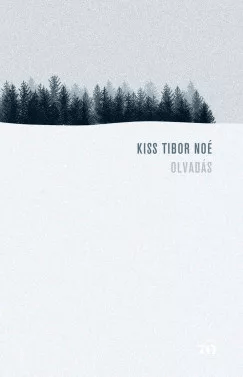
TIBOR NOÉ KISS: Thaw

A haunting journey through frozen landscapes

Two stories of quest – one set in the frozen expanse of the taiga in Siberia, the other in a Hungarian village among long-buried memories – intertwined by the love and longing of husband and wife for one another.

Set in the spring of 2019, the novel’s protagonist and narrator is a woman in her thirties who previously worked as a social worker and has begun a new life with her husband, a cultural anthropologist, in a village in southern Hungary. While her husband returns to Siberia to conduct research among the Khanty – where he encounters an unexpected and dramatic situation – her everyday life is thrown into turmoil by the death of her grandmother. As she worries for her husband, who has been out of contact for days, she also prepares for the funeral where she will confront her violent and abusive father, who had been imprisoned for murder. Meanwhile, her relationship with her mother gradually unfolds. As memories and images of the past keep surfacing, she slowly pieces together the mosaics of her own history. Interwoven with her inner monologue is the field diary her husband keeps in Siberia, which partly revolves around the mysterious disappearance of a woman.

The title is metaphorical: it alludes to a thawing out of relationships with the closest relatives frozen in ice and the possibility of some kind of transformation; but at the same time, among the Khanty (the closest linguistic relatives of Hungarians) it is the thaw that brings to the surface the dead who have lain under the snow for weeks – and, in the longer run, the force that will reshape the entire region and eventually erase it.

Tibor Noé Kiss works with a collage-like technique. He starts from images – inner states, associations, moments frozen to infinity, fragments of memory – that he strings together in such a way that their sequence gives rise to the story. The novel’s greatest power lies in its evocative atmosphere.

Product details
ISBN 978 963 1445 60 2
2025, hard cover with jacket
320 pages
5999 HUF

“I step into the circle of light. My father is standing somewhere in the darkness, watching me.”

Tibor Noé Kiss

Uncategorized

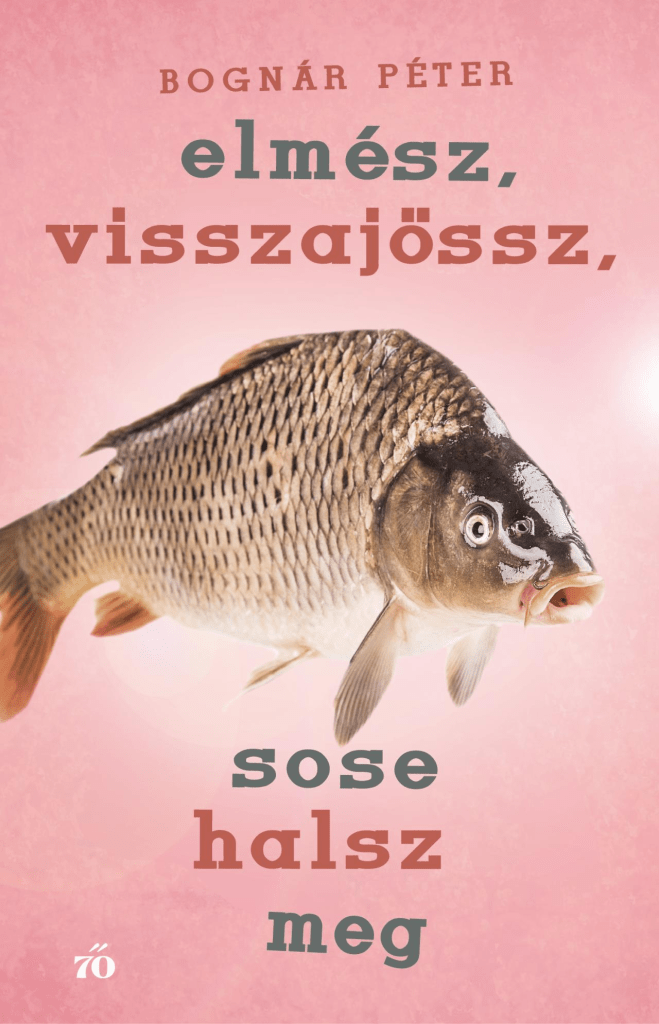
PÉTER BOGNÁR: You Will Go, You Will Return, and Never Die

An anti-detective story

A crime writer is forced to confront the possibility that his novels may be inspiring real crimes. When a fellow villager accuses him of defamation and is later found dead, suspicion falls on the writer’s friend, the local civil patrolman, who has vanished. Fleeing the village with his young daughter, the writer sets out to find his friend – only to be drawn into a chain of extraordinary and shocking events.

The protagonist of the novel, nicknamed Besseller, is a writer who bears a close resemblance to the author himself. He is forced to confront the unsettling possibility that his crime novels may themselves be causing real crimes. A fellow villager, nicknamed Individum, who had previously accused him of defamation has died from a terrible blow.

Can he go on writing, especially now that a German edition – long a coveted prize among Hungarian writers – is already in preparation? And as if he didn’t have enough to contend with, jealousy begins to torment him when his wife hints that she may want to exercise her sexual freedom – the very freedom Besseller has urged on her for so long.

A chain of extraordinary events follows. Besseller leaves with his young daughter, Lizi, to search for his friend Tóni, the civil patrolman accused of the murder and now missing. In reality, Tóni has been lured into a trap – cruelly deceived, beaten, and nearly killed in a sequence of absurd and irrational incidents that nevertheless unfold with grim, inexorable logic.

The two storylines – that of the writer and that of the civil patrolman – run in parallel and are, in the end, very similar. Even though they’re two very different people: one an intellectual, the other an ordinary man, both of their lives are gradually falling apart.

In serious and playful ways, Bognár’s novel asks many questions. How does a marriage fall apart? How does someone – anyone – become a narrow-minded, monomaniacal, compulsive person? How does a novel get written? More precisely, how does a detective story, traditionally based on logic and rationality, get written in a world in which irrationality abounds? And should literary works be censored if they offend someone’s sensitivities?

The title is a quote from Plutarch, an oracle that has two possible meanings: “You will go, you will return, and never die in war; you will go, never return, and die in war.” The protagonists of Bognár’s novel are experiencing the fact that at any moment they could be cast out of the world they consider familiar and from their well-established beliefs.

Bognár’s style is playful, ironic, with grotesque and absurd scenes, and with nods to the sentimentality of popular fiction.

Product details
ISBN 978 963 1445 5 41
2025, hard cover with jacket
296 pages
5499 HUF

I read everything by Péter Bognár: he – put simply in terms of ranking – is the greatest among us. (László Krasznahorkai)

Péter Bognár

Uncategorized

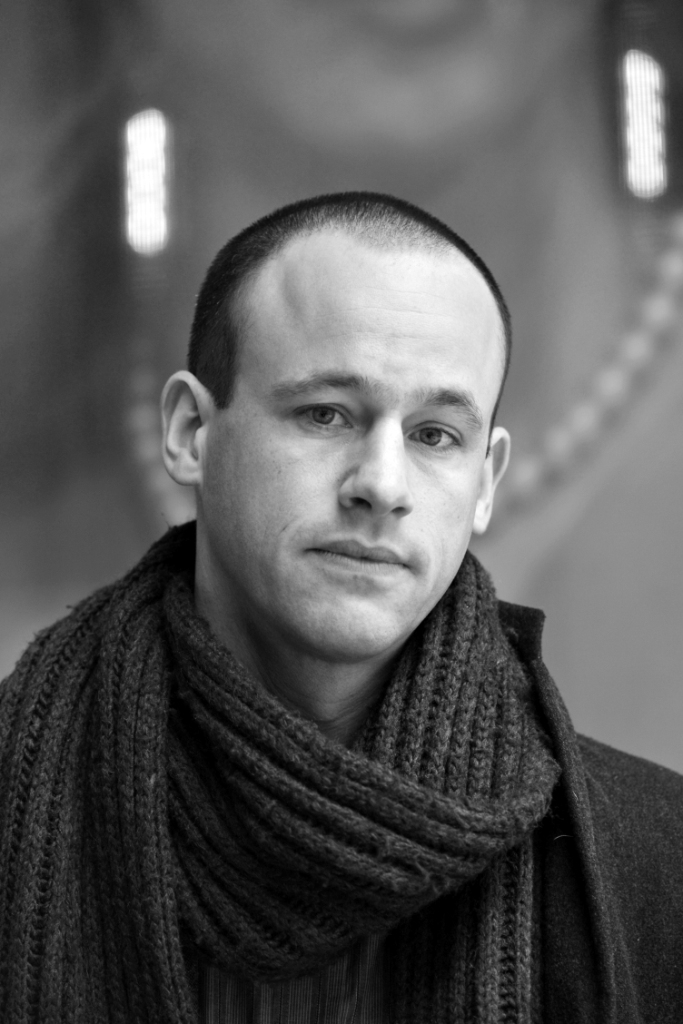
Péter Bognár

Born in 1982, Péter Bognár is a poet and a writer. He has been awarded the György Petri Prize (2011), the Artisjus Literary Prize (2016) and the Tibor Déry Prize (2025). 

He has published three volumes of poetry and three novels (To Sail is Necessary, to Live is Not Necessary; The Fewer Christmases the Better; You Will Go, You Will Return, and Never Die) to date. One of his plays has been on the programme of the József Katona Theatre, one of the leading Budapest theatres, since 2017.

You Will Go, You Will Return, and Never Die

Uncategorized

ÁDÁM BODOR: The Sinistra Zone

Novel

The now-classic novel by Ádám Bodor was first published a quarter of a century ago, in 1992. Set in a mountainous landscape that feels at once familiar and lunar, the story depicts the workings of a totalitarian system with deep irony and dark humor, within a strictly confined, sparsely populated and grotesque world.

Sinistra appears at once stubbornly real and unimaginably absurd. Ádám Bodor’s timeless classic leads us into a mysterious world where nature is astonishing and self-contained, where people speak little but bear eloquent names. It is a barren, desolate landscape—yet one the author describes with mesmerizing beauty.

With this novel, Ádám Bodor succeeds in creating a reality beyond time and place, in the darkness of human consciousness.

Reading Ádám Bodor, we do not think of words at all: we think of humiliation, helplessness, hope, frost, rime, forest, stench, bear, brandy, man, woman. Of velvet-bottomed Elvira Spiridon, of Aranka Westin with her great white thighs, of Connie Illafeld, who turned from a lustful fairy into a hairy beast, of Bebe Tescovina, whose eyes glow at night like a lynx’s. …Whether all this is realism, surrealism, or magic—it’s hardly worth pondering these days. Or perhaps it never was? It seems increasingly certain that someone is dreaming us. After this book, with growing curiosity and constant dread, we might ask: what if that someone wakes up? Who? (Péter Esterházy)

Product details
ISBN 978 963 14 3547 4
2017 (first published: 1992), hard cover with jacket
176 pages, 120×200 mm
3499 HUF

Rights sold
English, New Directions
French, Cambourakis

Polish, Czarne
Italian, e/o
Spanish, Acantilado
German, Ammann

Bulgarian, Atelie AB
Danish, Heureka
Czech, Havran
Croatian, Meander
Estonian, Voluri Tagasitulek
Norwegian, Glyndendal Norsk
Russian, Jaziki Slavyanskoy Kulturi
Romanian, Humanitas
Serbian, Dereta
Slovak, Slovart
Slovenian, Modrijan

Complete English text available

Ádám Bodor