Novel
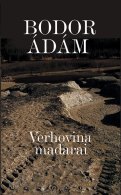 Home to nine hot springs, Verhovina used to be rich in natural beauty yet it has become a waste land, with only a few dozen inhabitants left. Trains to Verhovina are scarce; the timetable was cancelled. One day, even the birds disappeared from the region. The village has virtually lost contact with the outside world, though it seems to depend on some faceless, invisible power whose arrival always spells mysterious disappearance and violent death.
The reader arrives in Ádám Bodor’s world, the periphery of civilization, at the break of dawn. Adam, the foster son of Brigadier Anatol Korkodus is waiting at the dilapidated station for a boy who is arriving from a reformatory school. Soon afterwards, Korkodus is arrested, for unfathomable reasons. As the subtitle says, these stories are ‘variations on the last days.’ Yet this decaying and sinister world, populated with people bearing fantastic names (Bodor’s trademark), is not devoid of a certain joie de vivre: people eat gourmet dishes, point out their interlocutor’s hidden motives with incredible acumen, and enjoy the stunning natural beauty. Ádám Bodor’s novel is the description of a totalitarian society in all its irrationality, absurdity and implacability – a description that alternately provokes laughter and shuddering in the reader.
The Birds of Verhovina is oppressive and cruel without ever being gratuitously so; hilariously funny without being silly; magic and surreal without being gaudy or bombastic.
“The quality of Ádám Bodor’s humour is akin to the hardly perceptible smile of a Buddhist – as it appears on the smeary face of Eastern Europe. And it can turn into the grimace of horror in any given moment.” (Viktória Radics)
Product details
ISBN 978 963 14 2873 5
2011, hard cover with jacket
256 pages, 135×197 mm
2990 HUF
Rights sold
English, Jantar
French, Cambourakis
Polish, Czarne
Italian, Il Saggiatore
Arabic, Fawasel
Spanish, Acantilado
German, Secession
Russian, Polyandria
Persian, Ana Pol Press
Complete English, French and Polish texts available
English excerpt published in Best European Fiction 2019 (Dalkey Archive Press)
Ádám Bodor


 Suppressed passions, ready to erupt like a volcano, humiliation, and quiet hopelessness, written in a dream-like yet precise prose. In Bodor’s stories, there are no false tones or super f luous sentences and adjectives. Everything is in place, and mercilessly so. This is a mysterious world, hidden under our threshold, yet all too familiar and real. Bodor’s characters and scenes are alive: with a few words or sentences, this author gives a staggeringly authentic picture about almost anything: love, misery, human gestures and inhumanity. This collection of Bodor’s stories proves that Bodor is an outstanding figure of contemporary literature.
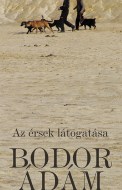 Bodor’s novel takes place in a village in the Carpathian Mountains. Situated in the centre of Europe, this godforsaken village is surrounded by piles of garbage that give off a sickening stench. In the middle of the village, there is a penal colony for real and alleged consumptive patients – a reservation within a reservation where acts of senseless cruelty and tender love are committed, reported by the narrator in the same matter-of-fact tone. It seems that the village has recently undergone a change of regime: the feared overlords of Bogdanski Dolina, the mountain riflemen have been replaced by priests – though rumour has it that those are in fact colonels and army officers in disguise. In any case, the locals are now waiting for the visit of the archbishop.
 was born in Kolozsvár (today Cluj, Romania) in 1936. He was convicted as a political criminal at the age of 16, and spent the years 1952–54 in prison. His first book (The Witness) was published in 1969 in Romania, while in Hungary his debut piece was a collection of short stories entitled A High Mountain Pass (1980). He has been living in Hungary since the early 1980s; for a time, he was editor at Magvető Publishing. In the 1990s he became familiar to the wider reading public after the publication of his novels Sinistra Zone (1992), The Visit of the Archbishop (1999), the most comprehensive collection of his short stories to date, Back to the Long-eared Owl (1997), as well as a confessional, autobiographical piece which was eventually given an interview form (The Smell of Prison, 2000). Bodor’s books have been published in more than twenty languages. Several of his works were made into films, including Zoltán Kamondi’s Dolina, based on The Visit of the Archbishop.
 was born in Rio de Janeiro in 1957 and grew up in Brazil and Hungary. A writer, essayist and critic, she made her fiction debut in 2007 with Esti iskola – Olvasókönyv felnőtteknek (Night School: A Reader for Grownups – published in German by Suhrkamp Verlag). Her stories have been widely anthologized. Her work as an essayist, fiction writer, and critic has been awarded several prizes.
 Magvető Rights
You must be logged in to post a comment.