

Memoir
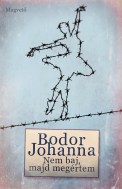 An extraordinary, upsetting and profoundly honest story about communist Romania in the 1980s, this book is the memoir of a young girl and a witness account of a dark era. She is only 18, and she wants to become a ballet dancer. As Romanian citizens of Hungarian nationality, her family has a plan: she enters into a sham marriage with a Hungarian, and her parents will soon follow her to Hungary and relative freedom. Due to an unexpected turn of events, her parents make it to Hungary first, and she stays in Romania all on her own, confronted with Ceauşescu’s state bureaucracy. This, then, will be her life setting for the following year when some of the most important events of her young life are about to take place: her ballet exam, her final year in secondary school. And the effective liquidation of all their former life in Romania.
A real ”Everyday Life in a Dictatorship for Dummies”
Product details
ISBN 978 963 1431 70 4
2016, hard cover with jacket
224 pages, 135×197 mm
2990 HUF
Rights sold
Polish, Świat Książki
German excerpts available
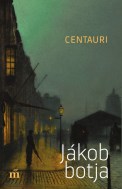 San Francisco in the 1890s. A young man has had enough of the oppressive world of the family household and a society that offers little to him, and chooses a life of adventure and experience. Wandering around on land and sea, encountering love and passion, he finally grows into an adult. This novel invites the reader to join the protagonist on a magic journey to the unpredictable landscapes of human nature. It is a kaleidoscope-like narrative that can be read as a Bildungsroman, a novel of adventure, or a love story. Though at times the events and characters evoke the life of Jack London, this book is not about the American writer but about how to become Jack London.
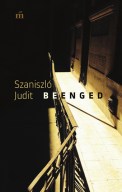 Judit Szaniszló’s book is like an Eastern European Bridget Jones’s Diary. The world of a thirty-something woman in Hungary unfolds from this book, with familiar, everyday problems – loneliness, relationships, life in an office – presented from a fresh and original perspective. Szaniszló, who is also a blogger, writes clear and simple stories in a style that is immediately accessible and yet of high literary quality – one reviewer dubbed it as ‘a literary reality show.’ These are cheeky, acerbic and sensitive stories, leaving the reader curious as to what will become of the protagonist, with whom it is easy to identify and whom it is easy to like.
 A volume made up of 17 short stories, introduced by a Dedication in memory of the author’s parents, The Deceptive-looking Guest is a harrowingly personal book that meditates on the interconnectedness of historical and personal, family traumas, and whose predominantly first-person narrators occasionally ”inhabit” the bodies and identities of strangers, close or distant family members, switching gender. Most of the stories walk the line between an enhanced, hyper-lucid perception of the world of objects and persons, and a pervasive oneiric, nightmarish mode, erupting in memorable images, all the more intense for the rigorously bare language used. In a subdued way, these stories offer an anatomy of personal responsibility and of the functioning of dictatorships. Many also have as subtexts, or respond to, passages from the Divine Comedy, St. John of the Cross, Pessoa, or Borges – texts/authors with which the author engaged creatively, having also translated some. The setting is mostly Budapest, portrayed as a terrain of loneliness and indistinct threat; the time encompasses the (silenced) troubles of the postwar and post-1956 periods, the consolidated placidity of the 1970s-80s, up to the years after the regime change when resurfacing neonationalism and neofascism brought out the complicit continuities in power. Takács’s stories, just like her poetry, belong to the most intense and unique writings of melancholy in our time.
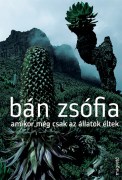 How many images do we have of ourselves? Of others? Of our culture? In her book, Zsófia Bán finds many ways, and as many captivating stories to ask and answer these questions. What is a picture? An image? Is it the shift in life, love, and chemistry, as one person replaces the other in the snapshots of a love triangle’s unexpected events? Or the flickering attraction between a taxi driver and a passenger, doomed because some things are just too hard to change? Is it the intimate secret behind the first ever X-ray picture and its laconic caption made by Wilhelm Röntgen in 1895? From the jigsaw pieces of recurring motifs and characters throughout the book, we can also discover a family history played out in 20th century Eastern Europe and outposts of exile from Antarctica to South America, told from the perspective of mothers and daughters. When There Were Only Animals is a book about relationships. It is wonderful, passionate, and clever. And very entertaining.
 Magvető Rights
You must be logged in to post a comment.