

with illustrations by Zsuzsi Medve
 ‘Once upon a time there was a car. The car belonged to the Old Miss, and it was shiny and clean inside and out, because Miss liked things to be tidy and clean, and she liked her old car too.’ This is how Aliz Mosonyi’s latest stories start—for young and old, drivers and pedestrians, travellers and armchair explorers. You’ll come across drive-in cinemas, a postal worker, a queen, a porcelain dog and a real one, and everything else the Old Miss encounters on journeys in her old car.
Aliz Mosonyi’s gentle humour is loved by children and adults alike. We recommend the car stories for children aged 3 and over. They could also be an excellent introduction to independent reading for beginners of five or six years old.
For children ages 3 to 6
…these few pages are perfect for a bedtime story, for tired parents, for little ones who want to laugh, travel, and have adventures, and Zsuzsi Medve’s drawings with their colours and scents make them even more lifelike.” Magyar Narancs
Product details
ISBN 978 963 1432 98 5
2015, hard cover
64 pages, 240×210 mm
2990 HUF
English excerpts available
 This novel is an extraordinary story about an unforgettable woman – a story that took place in the Budapest of the 1940s, full of glamour as well as mortal dangers. In chapters alternating between the past and the present – the grey, boring and eventless Budapest of the 1970s – the author tells the story of Baby Vadnai, a beautiful, rich and fashionable young woman, and the investigations of Dobrovich, a budding writer and member of a ‘tribe’ of young intellectuals in Communist Hungary. Dobrovich and a friend, Doxa, the legendary loiterer, madman and visionary of the ‘tribe,’ suspect they might be brothers, and Dobrovich starts to make investigations about their father. A story of passionate love and hate unfolds, with the milieu of Budapest in the 1940s – the siege of Budapest, the persecution of Jews and the glittering social life of the high classes – in the background. Baby Vadnai is a historical novel in which both wartime and Communist Budapest are powerfully evoked.
 Besides being the story of a brave coming out in 1990s Hungary, Incognito is a remarkable debut of a promising writer, a novel which traces the inner development of an individual.
 The inclination to travel: to set off to faraway lands, to leave behind the familiar world, one’s home – only to look for what is familiar in the place that attracted us precisely because of its strangeness and otherness. Rather than visiting glamorous cities, Noémi Kiss visits the peripheries of Eastern Europe: Bukovina, Backa and Galicia. As she is open-minded enough to allow for otherness, she returns from her trips with more than just herself. Her Eastern Europe is sensitive, diverse, full of contradictions and enduring. It is her attention that sets off the historical lustre of shabby places, opening larger vistas than the present state of dilapidation and scarcity. And it is her openness that makes us believe that Ukraine is home not only to the most beautiful and the ugliest woman in the world but the middle of the world as well.
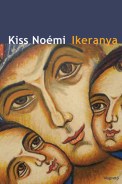 What does it mean to give birth, and how does it feel to be born? This exquisite book by Noémi Kiss is subtitled ‘foetal prose.’ A rhythmic succession of narratives, monologues, notes and meditations describes the whole process of birth, from artificial insemination to labour, ending with the first birthday of the twins. Some of the stories are told from the perspective of the mother, others from that of the twins. Birth is present in this book as a physiological reality and spiritual miracle, with its various stages of hoping, pain and helplessness, and the hard-earned moments when mother and child manage to find a common language. As a result of a cosmic yet banal process, ‘I’ and ‘you’ merge into ‘we.’ Confronting a number of taboos about pregnancy and child-rearing, the book of Noémi Kiss is liberating reading.
 Magvető Rights
You must be logged in to post a comment.