
Novel
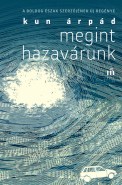 A family of four sets out to cross Europe in an old Suzuki. They are leaving Hungary to find home in the ‘happy north.’ Similarly to Karl Ove Knausgaard’s My Struggle, the narrator of Árpád Kun’s new book shares the author’s name and personal history, yet this is not an autobiography but a true-blooded novel. In an era of displacement and migration, here is a novel which documents the emigration of a young Hungarian couple to Norway. As the family is making the decision to leave, the protagonist starts to travel back in time, to his childhood, his university years and his attempts to land a job in Budapest, Brussels and Bordeaux. A fascinating guidebook about finding our own path without ceasing to love our ancestors, Hope to See You Home Again is also a novel about young people in Hungary at the turn of the 21st century.
The story of a young Hungarian couple’s emigration to Norway
Product details
ISBN 978 963 1434 14 9
2016, hard cover with jacket
420 pages, 140×215 mm
3990 HUF
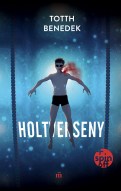 On a deserted bypass somewhere in the Hungarian countryside a sports car full of teenagers races through the pitch black night. A threatening enough start for a novel, yet even so, what follows is unexpected. Neither the readers nor the characters can expect the kid-glove treatment from Benedek Totth in this, his first novel. Elements of the teenage novel, the detective story, the psychological thriller, and the Bildungsroman mingle in this strange text, which is oppressive (yet at times humorous), and cruel (though not for the sake of it). If anyone recognizes today’s Hungary, with its more or less abandoned teenagers, loitering mostly unhappily, sometimes sad but more usually angry — then they’ve got the picture. Yet this is less a social critique than a highly personal confrontation with the teenager we all once were, or might have been, in this dismal place (no country for old men), where even wild boars are not what they seem.
 Benedek Totth’s new novel is a post-apocalyptic adventure story about a young boy who sets off with a wounded American paratrooper to find his younger brother who may or may not be dead. The unnamed narrator of the story is hiding with his friends in a shelter in a city that had been bombed to ruin in a war between Russian partisans and American commandos. Life in that city is an endless series of brutal suffering, torture and death, until the boy meets a wounded American paratrooper. In that world, there are no allies, only enemies, yet when bombs start to fall again, the boy realizes that he has a chance to survive only if he hooks up with the American soldier. So he decides to save him.
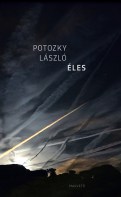 A novel that defines a generation, strong in tone, and drenched in blood. The narrator is a young man, a university student in present-day Transylvania who maps out for us his life and his personal psychology. The only thing he can latch onto is pain, and the tiger stripes he scores into his own thighs with nail scissors. His girlfriend is a student too, and for some time now she has been making money from prostitution – not for fun, or out of curiosity, but out of genuine necessity, so she can pay for her lodgings and studies. Where exactly they slip up, where they slide from being penniless students into actual crime, how they clamber out of it, and what happens next – these are the questions answered, or deliberately left open, by László Potozky.
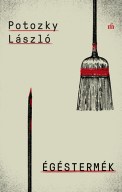 Products of Combustion takes place in 2017, in the unnamed capital city of an unnamed Eastern European country at the time of a revolution. The events and the actors are uncannily real: a government that is gradually becoming authoritarian; paralytic opposition politicians on the lef t; violent ones on the far right; and young people who spend their days arguing about politics, going to demonstrations, and are increasingly radicalized. The narrator is a 28-year-old man, a loner and a drif ter, who meets Nikka, a student who is fervently involved in politics, and drags her new boyfriend first to demonstrations, then to clashes escalating after a number of young people die in a fire at a rock concert (an event based on the Colectiv nightclub fire in Bucharest, 2015). The revolution that ensues is modelled on the Euromaidan protest movement in 2014 in Kiev. While the fanatically liberal Nikka fights against oppressive power, oppressively trying to mold her boyfriend’s character, the narrator becomes a fighter in a far-right paramilitary troop. Other characters include the narrator’s brother, a policeman who finds himself on the opposite side of the barricade as his brother; a young intellectual who is transformed into a power-hungry marionette as soon as he rises to power; and an Israeli ex-soldier who leads the neo-Nazi rebels’ brigade.
 Magvető Rights
You must be logged in to post a comment.