
Novel
 The novel is set in a photographer’s studio in September 1940, at a gathering of relatives, friends and lovers, all linked by the single figure of the hostess, Janka Weiner – her cousin who works in a fashion boutique, her seminarian brother, a military attaché, a young poet, a reporter, girlfriends, and journalists. Some of these people have German, others Hungarian or Jewish roots, others are less simple to define. They are simultaneously enthralled by news of regained territory, lost in World War I, and shocked by the newly introduced race laws. Where have they come from, and what will become of them when the war is over?
Product details
ISBN 978 963 14 2653 3
2008, hard cover with jacket,
390 pages, 123×184 mm
2990 HUF
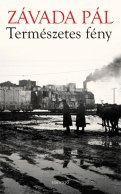 Pál Závada’s magnum opus is a novel about World War II, as well as the years leading up to it and following it. The story narrates the life of inhabitants of a large Slovak- populated village in Hungary, at home and in various locations in Central and Eastern Europe. Amid a multitude of characters, the story of two families stands out. Though the children of the former judge and those of the Jewish photographer grew up together, their lives take very different turns. In Natural Light the reader is swept along by existing, lost, and even imagined photos, letters, diaries and fictitious work-camp reports, and confronted with the everyday experience of the war. Meanwhile, some become perpetrators, others victims.
 How do people come to be part of a lynch mob? To be more precise: what makes passers-by in a village and customers at a market turn against their neighbours who had just come back from death factories? Pál Závada’s new novel tries to give an answer to this question through the story of the anti-Semitic pogroms of 1946 in Hungary. One market day the narrator, daughter of a respected village shopkeeper and wife of a teacher, witnesses an attack against a Jewish egg-seller, which degenerates into bloodshed. The violence is led by local women, and neither women nor children are left unscathed. After the pogrom an investigation is started. During the enquiries prior events come to light, and the reader gets an insight into the conditions of life during and after the war, as well as the events that led up to the tragedy. The novel focuses on people and the distortions in human relationships for which history is partly responsible – history that can put any of us to the test at any moment, even today.
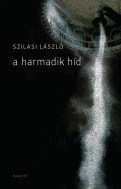 The Third Bridge is the story of one long night. Meeting at a school reunion thirty years after graduation, the characters relive the bygone decades. The events – including a murder and a mysterious disappearance – are mediated through the subjective, emotional viewpoint of a former émigré to Canada, and the leaner, more rational angle of a detective returned from Germany, with the two stories at times contradicting each other. But the real hero of The Third Bridge is Peter Foghorn, the former golden boy of the class, a favourite with the girls, who was expected to achieve great things, and whose life and death is a matter of conjecture among the former classmates. As the story of Feri, the former émigré unfolds, we learn that after returning from Canada, burnt out and penniless, Feri spent some time together with Foghorn as members of a group of homeless people in the town of Szeged. Leaving moralizing aside, László Szilasi maps the rituals, survival strategies and desires of various castes of homeless people as accurately as possible. Though we never learn how exactly Foghorn ended up as a busker and leader of a homeless community under the pseudonym of ‘Robot,’ we can certainly identify most of the other characters of the novel who came of age in the 1980s as products of the chaos which ensued after the regime change and which caught people brought up in a Communist regime completely unawares. The mysterious figure of Foghorn represents failed promises, but also a certain kind of freedom – the unwillingness to take part in the nasty games of post-Socialist society.
 Sándor Tar’s novel takes place in a village in post-1989 Hungary. Though the place is clearly identifiable as a Hungarian village, and the time as the decades following the hopeful and happy years of the regime change when hurried and corrupt privatization led to the increased deprivation of many, the inhabitants of Crooked Street are the eternal insulted and injured. Yet Our Street is far from being a drab sociographic novel. Written with an irresistible sense of humour, empathy and a keen eye for detail, these minimalistic stories portray wasted lives with rare beauty. Alcoholics, unemployed and handicapped people, pensioners, Tar’s “protagonists are characterized by a sense of intertwined ridiculousness and tragedy that marked the fates of Charles and Emma Bovary.” (László Szabolcs, The Quarterly Conversation)
 Magvető Rights
You must be logged in to post a comment.