
Short stories
 A volume made up of 17 short stories, introduced by a Dedication in memory of the author’s parents, The Deceptive-looking Guest is a harrowingly personal book that meditates on the interconnectedness of historical and personal, family traumas, and whose predominantly first-person narrators occasionally ”inhabit” the bodies and identities of strangers, close or distant family members, switching gender. Most of the stories walk the line between an enhanced, hyper-lucid perception of the world of objects and persons, and a pervasive oneiric, nightmarish mode, erupting in memorable images, all the more intense for the rigorously bare language used. In a subdued way, these stories offer an anatomy of personal responsibility and of the functioning of dictatorships. Many also have as subtexts, or respond to, passages from the Divine Comedy, St. John of the Cross, Pessoa, or Borges – texts/authors with which the author engaged creatively, having also translated some. The setting is mostly Budapest, portrayed as a terrain of loneliness and indistinct threat; the time encompasses the (silenced) troubles of the postwar and post-1956 periods, the consolidated placidity of the 1970s-80s, up to the years after the regime change when resurfacing neonationalism and neofascism brought out the complicit continuities in power. Takács’s stories, just like her poetry, belong to the most intense and unique writings of melancholy in our time.
Product details
ISBN 978 963 1425 60 4
2007, hard cover with jacket
200 pages, 123 × 184 mm
2490 HUF
English excerpts and detailed synopsis available
 The novel is set in a photographer’s studio in September 1940, at a gathering of relatives, friends and lovers, all linked by the single figure of the hostess, Janka Weiner – her cousin who works in a fashion boutique, her seminarian brother, a military attaché, a young poet, a reporter, girlfriends, and journalists. Some of these people have German, others Hungarian or Jewish roots, others are less simple to define. They are simultaneously enthralled by news of regained territory, lost in World War I, and shocked by the newly introduced race laws. Where have they come from, and what will become of them when the war is over?
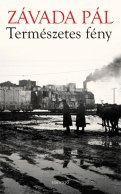 Pál Závada’s magnum opus is a novel about World War II, as well as the years leading up to it and following it. The story narrates the life of inhabitants of a large Slovak- populated village in Hungary, at home and in various locations in Central and Eastern Europe. Amid a multitude of characters, the story of two families stands out. Though the children of the former judge and those of the Jewish photographer grew up together, their lives take very different turns. In Natural Light the reader is swept along by existing, lost, and even imagined photos, letters, diaries and fictitious work-camp reports, and confronted with the everyday experience of the war. Meanwhile, some become perpetrators, others victims.
 How do people come to be part of a lynch mob? To be more precise: what makes passers-by in a village and customers at a market turn against their neighbours who had just come back from death factories? Pál Závada’s new novel tries to give an answer to this question through the story of the anti-Semitic pogroms of 1946 in Hungary. One market day the narrator, daughter of a respected village shopkeeper and wife of a teacher, witnesses an attack against a Jewish egg-seller, which degenerates into bloodshed. The violence is led by local women, and neither women nor children are left unscathed. After the pogrom an investigation is started. During the enquiries prior events come to light, and the reader gets an insight into the conditions of life during and after the war, as well as the events that led up to the tragedy. The novel focuses on people and the distortions in human relationships for which history is partly responsible – history that can put any of us to the test at any moment, even today.
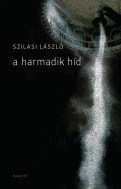 The Third Bridge is the story of one long night. Meeting at a school reunion thirty years after graduation, the characters relive the bygone decades. The events – including a murder and a mysterious disappearance – are mediated through the subjective, emotional viewpoint of a former émigré to Canada, and the leaner, more rational angle of a detective returned from Germany, with the two stories at times contradicting each other. But the real hero of The Third Bridge is Peter Foghorn, the former golden boy of the class, a favourite with the girls, who was expected to achieve great things, and whose life and death is a matter of conjecture among the former classmates. As the story of Feri, the former émigré unfolds, we learn that after returning from Canada, burnt out and penniless, Feri spent some time together with Foghorn as members of a group of homeless people in the town of Szeged. Leaving moralizing aside, László Szilasi maps the rituals, survival strategies and desires of various castes of homeless people as accurately as possible. Though we never learn how exactly Foghorn ended up as a busker and leader of a homeless community under the pseudonym of ‘Robot,’ we can certainly identify most of the other characters of the novel who came of age in the 1980s as products of the chaos which ensued after the regime change and which caught people brought up in a Communist regime completely unawares. The mysterious figure of Foghorn represents failed promises, but also a certain kind of freedom – the unwillingness to take part in the nasty games of post-Socialist society.
 Magvető Rights
You must be logged in to post a comment.