
Uncategorized

RÉKA MÁN-VÁRHEGYI: Sketch for Something Else

Magdi has uncontrollable bursts of anger, Ági has 10,000 followers, Györgyi has a husband with a career in politics, Anikó is having difficulties writing her novel. Réka Mán-Várhegyi’s book consists of four long short-stories offering a glimpse into the everyday life of four middle-class Hungarian women in their forties in the time of the pandemic.

Their monologues reveal the mental state of people during of the lockdowns, the variety of individual strategies for survival. Magdi is in therapy in order to understand the causes of her bursts of rage, constantly analysing and blaming herself. Ági has become an influencer despite hating the whole virtual world and the hypocrisy it involves: it is precisely doing yoga with unshaven legs and greasy hair that has made her so wildly popular. As for Györgyi, her rich politician husband disappears during a holiday in Croatia and she has to start her life again from scratch. The story of Anikó shows the difficulties of the life of a writer when she is a woman with a small child.

Réka Mán-Várhegyi depicts what must inevitably be fragments from the life of her characters with biting irony and profound sympathy. Through them we are able to gain an appreciation of the preoccupations of our time, from climate anxiety, through feminism, to self-help techniques and the aesthetics of ‘wellness’.

I do yoga in the kitchen, if there’s nowhere else. Practising the morning salutations of the sun, I take loud and harsh ujjayi breaths. Perhaps that’s why, as I move, there rise up in my mind’s eye images of public figures that I execrate.

Product details
ISBN 978 963 1441 74 1
2022, paperback with flaps
192 pages, 3499 HUF
Réka Mán-Várhegyi

Uncategorized

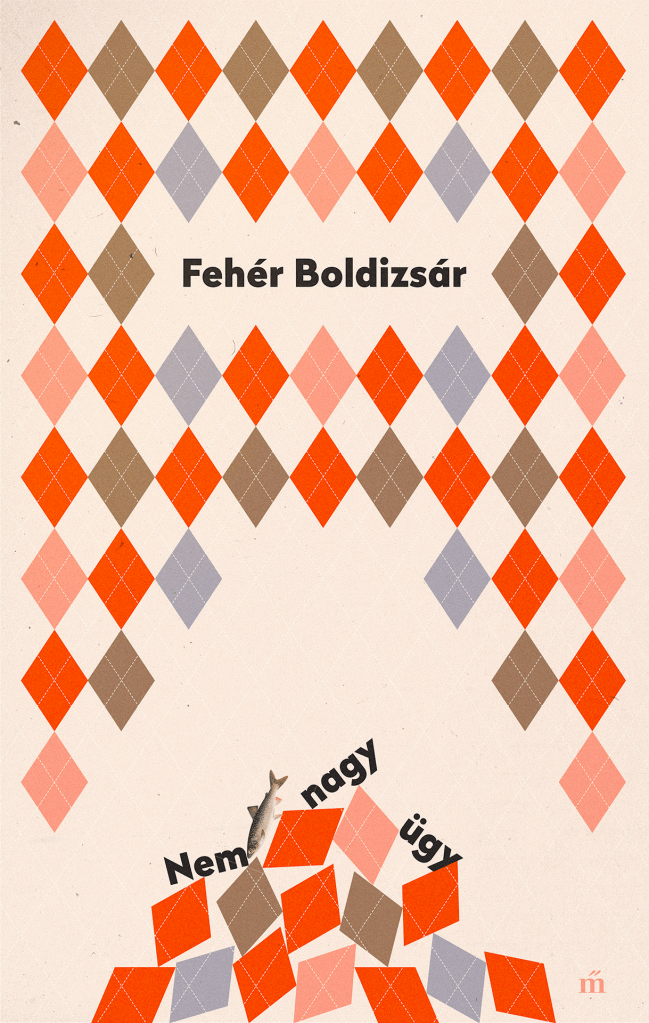
BOLDIZSÁR FEHÉR: No Big Deal

How can we dodge wasting time chatting on the street with someone we barely know? What should we do if we don’t like a present we have been given? Why does the barber always cut our hair shorter than we want?

Perhaps Socrates was right to say that the unexamined life is not worth living. But while Socrates was asking about the big questions of life, Boldizsár Fehér is preoccupied rather with its small questions: the everyday awkwardnesses and social situations in which we constantly find ourselves but which we would all love to avoid.

Boldizsár Fehér’s absurdist humorous sketches depict situations in which people defy the unwritten rules of polite society and with their unvarnished reactions drive their fellows mad. No Big Deal is a kind of inverted, tongue-in-cheek book of etiquette illuminating the many barriers, some big, some small, that we have to negotiate in the course of our daily lives.

It is an indisputable fact that acquaintances have long existed amongst us. That prompts the question: why haven’t encounters with familiar life forms so far received as much attention as we have devoted to encounters with alien life forms?

Product details
ISBN 978 963 1441 76 5
2022, paperback with flaps
224 pages, 125×30 mm
3499 HUF

Boldizsár Fehér

Uncategorized

ÁRPÁD KUN: Molly Male

Medárdus has emigrated from Hungary to Norway, where he lives with his wife and three children, with a fourth on the way. He makes his living as a carer in an old people’s home and as a home help: his day’s work done, he is able to devote himself to bringing up his children in ideal circumstances. The narrator, alongside his numerous family and work commitments, focuses on a single activity important to him: cutting short his sleep, he regularly gets up before daybreak to work on his novel.

This busy and hardworking life is upended when Medárdus, driving two of his daughters, crashes his car. Though no one is hurt, the accident sets off a chain reaction of events in the outside world as well as in the lives of those involved. A mysterious African refugee surfaces and becomes a close friend of the émigré Hungarian. With his help Medárdus discovers and explores a system of caves beneath his house that is home to exceptionally rare and valuable mushrooms.

Molly Male offers a highly distinctive fusion of reality and fantasy. The narrator’s failure to get a decent night’s sleep results in the life-story of a Hungarian-Norwegian family – which begins by depicting the life-affirming dignity of manual labour and a father’s everyday life amid the inhospitable landscape of western Norway – gradually acquiring a surreal quality. Yet thanks to the good-humoured and sympathetic tone so characteristic of Árpád Kun’s novels, somehow this comes to seem completely natural. The reader cannot tell where reality ends and fantasy begins, without ever feeling as though they have lost their bearings.

“It seems that everyone is constantly asserting how wretched life is, yet no one ever points out that every moment you have survived is an enormous anomaly. Every moment is a gift: look how fortunate you are it wasn’t you that died.” (Árpád Kun in an interview)

Product details
ISBN 978 963 1441 72 7
2022, hard cover with jacket
304 pages, 140×35 mm
4499 HUF

Árpád Kun

Uncategorized

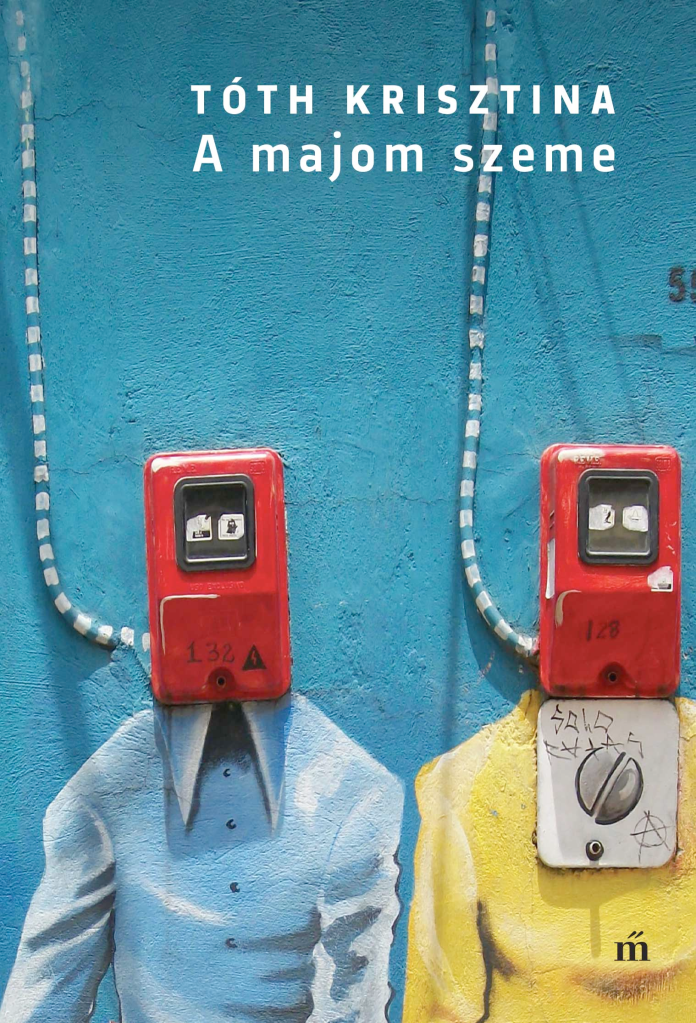
KRISZTINA TÓTH: Eye of the Monkey

Krisztina Tóth’s latest novel is set in a bleak city in the bleakest of times. The scene is an isolated country that has recently been through a devastating civil war. The new government rules with an iron hand and society is fatally divided: those close to the government live in the more affluent parts of the city, while the poor are confined to ghettos. Blackouts are frequent and there is a growing shortage of goods. There are no signs of disaffection, however, thanks to tight surveillance and trolling sponsored by the state.

This is the desolate world in which Giselle, a history professor at the unitary New University, and the renowned psychiatrist Dr Kreutzer happen upon each other. The latter appears at first to be a self-assured professional but he is gradually revealed as a sex addict who picks his victims from his pool of patients: it is their vulnerability that sexually excites him.

The novel’s main theme is abuse. It is set in a world where state power has an abusive relationship with its citizens and where abuse likewise pervades personal relationships. Krisztina Tóth dispenses the details a drop at a time. A society that initially appears to be relatively normal, and the professional who seems trustworthy, both turn out to be ­– slowly but surely – unmanageably abnormal.

The title alludes to an infamous and cruel animal experiment in 1970, when the neurosurgeon Robert White carried out the transplant of one monkey’s head onto the body of another. The monkey came to after the operation and horrific images of it can still be found on the internet. In these the creature can be seen opening its eyes for a moment, becoming conscious and aware of what has happened to it, only to later succumb to its fate.

The exceptional deftness of Krisztina Tóth is in plentiful evidence in this new novel. The excitement and the engaging nature of the action is framed by the author’s lyrical vision and her robust sense of humour.

“Toth is an acclaimed Hungarian writer and has written one of the most elegant, disorienting novels I’ve read this year: It’s funny and evenhanded enough that the finale arrives as a devastating fait accompli. And Mulzet’s translation is feverishly good.” (Joumana Khatib, The New York Times)

Product details
ISBN 978 963 1429 0 15
2022, hard cover with jacket
352 pages, 123×30 mm
4499 HUF

Rights sold
English, Seven Stories
Italian, Voland
Albanian, Onufri
Croatian, Fraktura
Turkish, Everest
Spanish, Acantilado
Modern Greek, Kastaniotis

Krisztina Tóth

Uncategorized

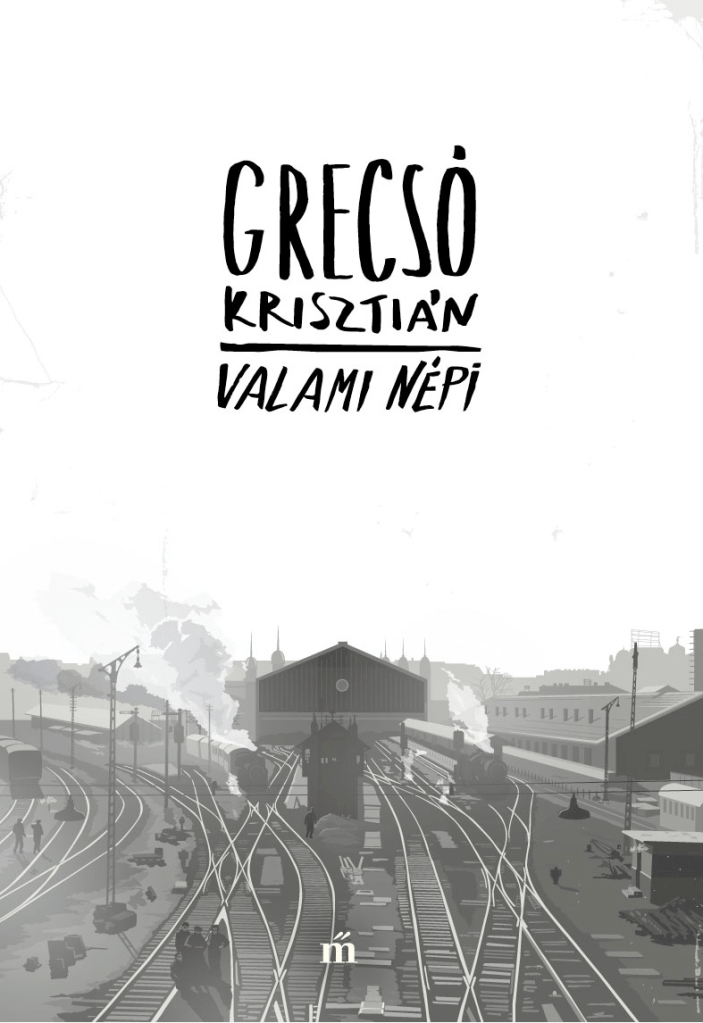
Krisztián Grecsó: Something Folksy

Short stories

In Grecsó’s new collection, many of the stories are born of the tension and confusion resulting from the meeting of two worlds. In some of the stories, these two worlds are the city and the village; in others, it is the present and the past. And, importantly, there is the world of the healthy and that of the sick. The severe illness from which the author has only recently recovered is a theme or motif in many of the stories.

The first part of the book consists of traditional ‘long’ short stories, where the point of departure is a scene or a place in the present which leads the narrator to recount some event in the past – in the 30s or 50s of the last century – with repercussions in the present. The stories in the second part, very personal in tone, are all about one man’s life at various points in time; those in the third are interrelated in the sense that the minor characters in one turn up as protagonists in others; and several of those in the fourth and final section are experiments in writing about happiness.

In narratives which oscillate between fiction, autofiction and autobiography, the author tells of village houses that are left half-completed, mere caricatures of their owners’ towering ambitions, and of places in Budapest that are missing from the tourist guidebooks, or that have already disappeared – like former factories replaced by sprawling housing estates. As for his characters, they come from all walks of life: we get glimpses into the lives of editors of literary magazines, unemployed Gypsy women, taxi drivers and shop assistants. Grecsó’s characters feel painfully alone in the crowd, yet this overwhelming loneliness is offset by the reader’s sense that our fates are intertwined, even if we are unaware of the fact, or indeed resist it. Grecsó loves and understands his characters, and there is in his stories an undercurrent of hopefulness, in spite of disappointments and tragedies.

Product details
ISBN 978 963 1441 55 0
2022, hard cover with jacket
288 pages, 125×280 mm
3999 HUF

Krisztián Grecsó