

A novel in short stories
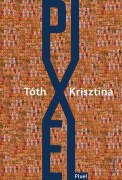 In her highly anticipated second book of short stories after the successful Barcode Krisztina Tóth goes further and further in exploring the invisible threads that connect relatives and strangers alike, determining our lives in dramatic, comic or tragic ways without us being aware of it. Each one of the thirty chapters can be read as an individual short story, telling tales of love, loss, failed attempts at communication or self-determination, in a snapshot that reveals a decisive moment in someone’s life when his or her destiny is forever changed – or the moment when it is decided that it is never, ever going to change…
The invisible threads that connect relatives and strangers
Product details
ISBN 978 963 1433 86 9
2011, hard cover with jacket
168 pages, 123×184 mm
2490 HUF
Rights sold
English, Seagull Books
German, Nischen Verlag
Macedonian, Ili-Ili
Slovenian, Lud Literatura
Polish, Studio Emka
Turkish, Dedalus
Swedish, Tranan
Italian, Edizioni ETS
Slovak, Phoenix
Chinese, CITIC Press
Estonian, Loomingu Raamatukogu
Spanish, Acantilado
Portuguese, DBA (Brazil)
Persian, Ana Pol Press
Albanian, Shkupi (Northern Macedonia)
Turkish, Everest
 The forty-odd stories in Krisztina Tóth’s new volume all take place in Hungary today, with ordinary Hungarians, some fortunate, others less so, as characters. In her signature style – acute observation and precise description – Tóth illuminates nooks and crannies that we don’t usually get to look into. Her stories tell tales of poverty, illness, migration, the presence of the powers-that-be in human relations, the distressing fact of the lack of solidarity and graceful moments of solidarity. Panther’s Pomp is a collection of poignant scenes and stories that will hopefully contribute to making its readers better human beings.
 In this novel about Budapest in the 1950s, every character is lonely. Vera, the little girl adopted by a Jewish couple living in deepest poverty, the adoptive parents themselves, who are living with the wife’s mentally disabled sister, a survivor of Auschwitz, as well as all their relatives and neighbours – absence of love is the only state of mind these people have ever known. The life of these grotesque, unappealing and destitute–yet loveable–characters is determined by the terrible events of the mid-twentieth century: World War II followed by communism, and the Soviet intervention of 1956. Yet history and politics barely make an explicit appearance in Krisztina Tóth’s novel. As wars, occupations and persecutions come and go, her characters try to accommodate adjust to the situation without understanding it – as those who have been humiliated and insulted always do. However, their suppressed emotions sometimes surface revealing the horror of their situation in a condensed moment. This bleak, oppressive and cramped yet transparent world is like the aquarium that Vera’s adoptive father sets up in their tiny living room, having seen one in a doctor’s flat.
 In a village somewhere in Hungary, a place where everything that can happen to a human being does in fact happen, Józsika Bizdó, the eccentric of the village notes down everything that he sees or hears around him into a checked notebook. These stories reveal how gossip, taboo, superstition and the religious beliefs of a village community demonstrate the workings of trauma, amnesia and collective memory. Buoyant, dirty and funny, Milbacher’s prose creates a world not unlike the Macondo of One Hundred Years of Solitude, a model of human communities.
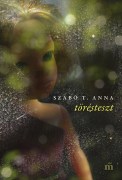 The characters in these stories are men and women who live here and now, among us. In Anna T. Szabó’s condensed, highly charged prose, characters give monologues – and sometimes engage in dialogues – that capture moments in which the essence of a life or of a relationship comes to light. The elevator man in a hospital is seen as Charon, the Ferryman of the Dead; a tired working mother sleeps through a bank robbery; disillusioned with flesh-and-blood relationships, people opt for silicon companions. In her first prose volume, eminent poet Anna T. Szabó writes mercilessly yet at the same time empathically about the loneliness and the heart-rending cold war of couples, about resignation, secret desires and people’s struggle for external and inner beauty, with some hope glimmering here and there.
 Magvető Rights
You must be logged in to post a comment.