Novel
 The author of the European Union prize winning novel Turkish Mirror has written another historical novel, about a fairly recent event: the invasion of Czechoslovakia by the Soviet Union and its satellite states in 1968. The invasion ended the period of liberalization initiated by Alexander Dubček, known as the Prague Spring. The narrator of Viktor Horváth’s novel is an of ficer in the invading Hungarian army, a half-wit who becomes an active participant in the events as an interpreter of the most prominent politicians. The protagonist is an immature character who admires political leaders and enthusiastically supports Communist dictatorship. He writes love letters to Julika, a Hungarian girl who lives in Czechoslovakia, plays with toy soldiers in the barracks with another officer, allows himself to be cuckolded by a secret agent to whom he faithfully reports everything that he hears as interpreter, and participates wholeheartedly in the aggression.
Yet far from being a bleak story, Viktor Horváth’s novel is incredibly funny. Besides the naivity and stupid enthusiasm of the narrator, the main source of fun is the language: the obscenity of army officers, the shiftiness and Communist jargon of politicians and secret agents, and the contrast between chilling events and their naive narration. The novel is interspersed with letters written to Julika, in which the protagonist narrates his life and ideas, asks Julika whether sex has already been introduced in Czechoslovakia under Dubček, and crosses out pieces of information that he suspects are in fact top secret. Other special treats include Villonesque ballads in which various characters, from a boar killed during a hunt – a favourite pastime of Communist leaders – to the lieutenant-general who signs the document authorizing the invasion, burst into song. My Tank is a funny book which is, however, based on research about the invasion and the negotiations preceding and leading up to it, and which, through the por trayal of the protagonist, shows how people fail to grow up in dictatorial regimes. Writing about one of the most shameful incidents in Hungary’s history of the second half of the 20th century, Viktor Horváth’s novel also calls attention to some chilling similarities between the power techniques of the Kádár era and our present time, as well as to the tendency to shift responsibility on others and to follow leaders.
My Tank was published as part of the “K4 – one book, four countries, four languages” project, a book series which promotes the translation of Central European works into other Central European languages. Each year, a Central European author’s work is published in four languages (Czech, Slovak, Polish and Hungarian) simultaneously, on the very same day, in all the four countries.
Product details
ISBN 978 963 14 3603 7
2017, paperback
276 pages, 125×197 mm
3499 HUF
Rights sold
Slovak, Iron Libri
Czech, Větrné mlýny
Polish, Książkowe Klimaty
Bulgarian, Ergo
English excerpts available
Viktor Horváth


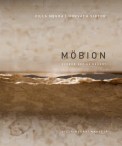 Having found salvation, Satan returns to Heaven. We see the world of humankind through his eyes. In this philosophical horror story with a splash of sci-fi and computer games, the priest-king of the Empire of External Power suspects that something terrible has happened to him, but cannot remember what it was. Everything points to the Empire’s very existence being under threat. An inquiry is set up to find out what has happened, while the reader has the creeping impression that the Empire of External Power is Hell, and its high priest is Satan – making him the protagonist and the narrator of the novel. It transpires that the high priest has gone under cover to the territory of his archenemy, the Empire of Internal Power, to give up the battle against salvation, and put an end to the ravings of his ego, unbalanced as it is by constant rebellion. A variation of an ancient myth, the story has a futuristic setting, and is speckled with adventure, battles, and love, but encapsulates a theological problem whose ultimate stake is Humankind. The title Moebion comes from the strip named af ter its inventor, Professor Möbius, and refers to infinity.
 Turkish Mirror takes the reader on an adventurous journey back in time to 16th century Hungary, when the country was still a new suzerainty of the victorious Sultan Suleyman the Magnificent, an unstable borderland situated between two great empires, a colourful cavalcade of calendars, taxation systems, languages, writings and sacred writings; kings and emperors, mighty sultans, Hungarian nobles and Ottoman Beys, merchants, city burghers, village magistrates – and from time to time, even angels and djinns and peculiar flying machines. In the novel, we see the city of Pécs gradually giving way to the world of the Thousand and One Arabian Nights where camels walk the streets, apricots and dates hang from the trees in abundance, thieves roam the woods, and the first mosque and Turkish bath are built. Indeed, the great charm of Turkish Mirror lies in its uninhibited flair for storytelling, while its ingenuity lies in showing us the world of Hungary through the eyes of the occupying Ottoman Turks, which is thus presented as a complex, puzzling multinational land froth with danger and ruled by complex power relations as opposed to the Padishah’s civilized and refined empire. Thanks to this surprising point of view, the reader suddenly finds himself on a terrain where everything that was familiar is now foreign and exotic. (Judith Sollosy)
 Described by critics as “the autobiography of Transylvania,” Gábor Vida’s novel tells the story of a Hungarian family in Transylvania at the end of the 20th century. Sad, bitter and ruthless yet written with gentle humor and empathy, The Story of a Stammer describes rural life in the Ceaușescu era, with its oppressive atmosphere, dictatorship and poverty, and the author’s own family, whose main virtue is decency and hard work. Vida writes with compelling honesty, breaking taboos that everyone knows about but no one ever says aloud. He charts the ways in which oppression and exploitation seep into family relationships, making education an abusive process. Particularly chilling are the narrator’s experiences in the eminently oppressive institutions of that society: the boarding school and the army. A chronicle of minority Hungarian life in rural Romania, Vida’s book is also a story of coming to terms with childhood-stammer, loneliness, and an unstimulating environment where religion, alcoholism and suicide are common escape strategies. Although the world he describes is sad and bleak, Vida’s lucid account is immensely enjoyable, and the novel also abounds in beautiful scenes describing the narrator’s love of nature and sport.
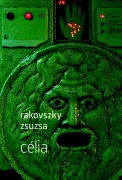 Zsuzsa Rakovszk y ’s new novel is an unusual family novel about the lack of family, the lack of meaning, and about patterns transmitted from generation to generation. Decades after the event the narrator of the novel, Adam, a man in his 40s who fails to grow up, learns that his casual acquaintance, Zsani, has a daughter who may be his daughter as well. That is how twenty-year-old Celia enters his life. While he is trying to help Celia as a father, Adam is inevitably faced with his own immaturity. Rakovszky depicts her characters with gentle irony and empathy – Adam, the drif ting intellectual who is unable to take responsibility or commit himself to anything or anyone; Zsani, Celia’s mother, whose extreme concept of freedom leaves her daughter insecure; Niki, Ádám’s beautiful and extremely dumb student whose dream is to get into a reality show; and Celia, who ends up in a religious sect. Written in Rakovszky’s signature style, Celia is sensitive and lucid, eminently readable, and full of precise snapshots of the society and mediatized environment of Hungary in the beginning of the 21st century.
 Magvető Rights
You must be logged in to post a comment.